

The Story Behind the Dish
Few dishes announce Spain quite like a beautiful pan of paella arriving at the table.
Paella’s roots are in Valencia, where rice has been cultivated for centuries. Early versions were practical outdoor meals prepared by agricultural workers using rice and ingredients readily available around them.
Traditional paella valenciana is generally associated with ingredients such as chicken, rabbit and beans rather than seafood. But as paella traditions spread through Spain’s coastal communities, seafood versions became enormously popular.
And that’s the version we’re bringing to our Global Kitchen.
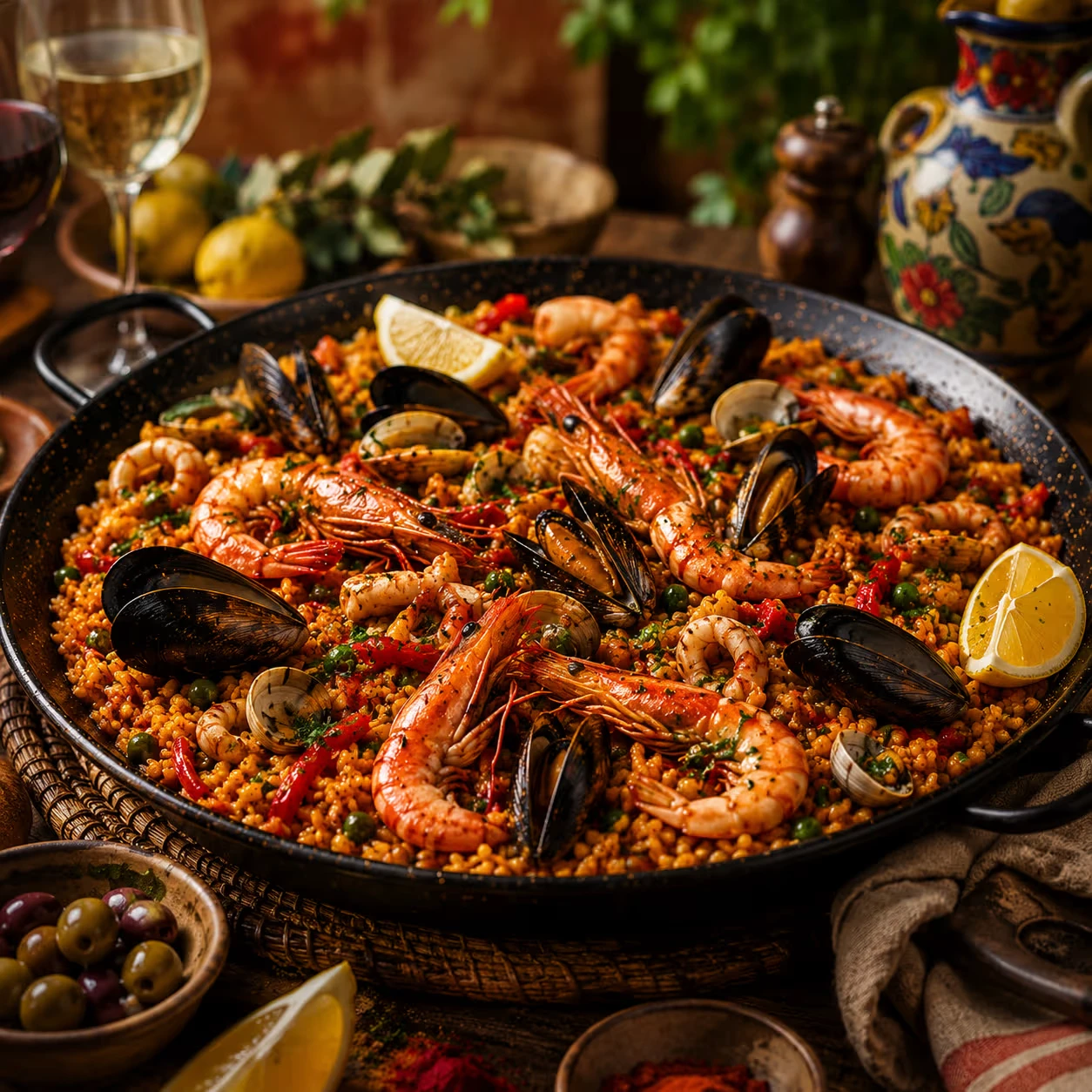
Shrimp, mussels and squid meet short-grain rice, tomatoes, smoked paprika and saffron in one colorful pan.
One of the secrets is what you don’t do.
Once the broth and rice are properly distributed, resist the urge to keep stirring. Unlike risotto, paella isn’t supposed to become creamy.
Instead, we’re hoping for another Spanish treasure at the bottom of the pan:
Socarrat
That slightly toasted, crisp layer of rice is often considered one of the best bites of the entire dish.
Why This Dish Matters
Paella isn’t simply dinner.
It’s a gathering.
The pan itself becomes the centerpiece, inviting everyone toward the table.
That’s precisely what Global Kitchen is about—food becoming the beginning of a conversation about another place.
Recipe at a Glance
Prep Time: 25 minutes
Cooking Time: 35–40 minutes
Resting Time: 5–10 minutes
Total Time: About 1 hour 10 minutes
Difficulty: Moderate
Serves: 6
Ingredients
For the Paella
- 2 cups Spanish short-grain rice, preferably Bomba or Calasparra
- 4 cups seafood stock
- ½ teaspoon saffron threads
- 3 tablespoons extra-virgin olive oil
- 1 medium yellow onion, finely diced
- 1 red bell pepper, thinly sliced
- 4 garlic cloves, minced
- 2 medium ripe tomatoes, grated or very finely chopped
- 1 teaspoon smoked Spanish paprika
- ½ teaspoon kosher salt, plus additional to taste
- ¼ teaspoon freshly ground black pepper
- ½ cup dry white wine, optional
- ½ pound large shrimp, peeled and deveined
- ½ pound mussels, scrubbed and debearded
- ½ pound cleaned squid, sliced into rings
- ½ cup frozen peas, thawed
- 1 lemon, cut into wedges
- ¼ cup chopped fresh parsley
Preparation
Step 1 — Infuse the Stock
Place the seafood stock in a saucepan over low heat.
Add the saffron and allow it to infuse while you prepare the remaining ingredients.
Keep the stock warm without boiling it.
Step 2 — Prepare the Seafood
Pat the shrimp and squid dry.
Season them lightly with salt and pepper.
Inspect the mussels. Discard any with broken shells or those that remain open after being gently tapped.
Keep the seafood refrigerated until you’re ready to cook it.
Step 3 — Build the Flavor Base
Heat the olive oil in a large paella pan or wide, shallow skillet over medium heat.
Add the onion and bell pepper.
Cook for approximately 5–6 minutes until softened.
Add the garlic and cook for another 30 seconds.
Stir in the tomatoes, smoked paprika, salt and pepper.
Cook for 4–5 minutes until the mixture becomes concentrated and aromatic.
Step 4 — Add the Wine
If using wine, pour it into the pan.
Allow it to simmer for 2–3 minutes until much of the liquid evaporates.
Step 5 — Add the Rice
Sprinkle the rice evenly across the pan.
Stir for approximately one minute to coat the grains with the tomato mixture and olive oil.
Spread the rice back into an even layer.
Step 6 — Add the Stock
Pour in the warm saffron-infused stock.
Stir once to distribute everything evenly.
Now stop stirring.
Allow the rice to simmer gently for approximately 15 minutes.
If your burner heats unevenly, occasionally rotate the pan rather than stirring the rice.
Step 7 — Add the Seafood
Arrange the shrimp, mussels and squid over the rice.
Press them gently into the liquid.
Continue cooking approximately 10–12 minutes.
The shrimp should become pink and opaque, the squid tender and the mussels open.
Discard any mussels that remain closed after cooking.
Step 8 — Finish the Rice
Scatter the peas over the paella.
Taste a grain of rice.
It should be tender but retain some structure.
If necessary, add a small amount of additional warm stock and continue cooking briefly.
Step 9 — Go for the Socarrat
During the final minute or two, slightly increase the heat.
Listen carefully.
You want a gentle crackling sound underneath the rice—not the smell of burning.
That is the beginning of your socarrat.
Step 10 — Rest
Remove the pan from the heat.
Cover loosely with foil or a clean kitchen towel.
Allow the paella to rest for 5–10 minutes.
Finish with parsley and plenty of lemon wedges.
Bring the entire pan to the table.
Chef’s Notes
Don’t substitute long-grain rice if you can avoid it. Spanish short-grain rice is much better suited to absorbing the flavorful cooking liquid.
And remember our most important rule:
Don’t stir it like risotto.
A wide skillet works perfectly well if you don’t own a paella pan.
Garnishing & Presentation
This one deserves some drama.
Bring the entire pan to the table and garnish with:
- Lemon wedges
- Fresh parsley
- Roasted red-pepper strips, optional
- A light drizzle of good Spanish olive oil
Serve with crusty bread, marinated olives and a simple salad.
🍷 Beverage Pairing
Wine: Albariño, Verdejo, Cava or dry rosé
Beer: Spanish lager or pilsner
Cocktail: Sangria or Spanish-style gin and tonic
Family-Friendly: Nonalcoholic sangria, sparkling citrus water or lemonade
⏱️ 5-Minute Travel Version
Need Spain on a Tuesday night?
Use prepared microwaveable rice and precooked shrimp.
Warm together in a skillet with:
- A little seafood or chicken broth
- Smoked paprika
- A pinch of saffron or turmeric
- Frozen peas
- Precooked shrimp
Finish with lemon and parsley.
No, we’re not going to fool anyone in Valencia.
But we are going to put dinner on the table and perhaps inspire somebody to try the full recipe on Saturday.
✈️ Gregg’s Passport Notes
Valencia deserves more than a quick stop for paella.
Walk the historic streets. Explore its markets. Spend time near the Mediterranean. Discover the remarkable contrast between the city’s centuries-old architecture and the futuristic City of Arts and Sciences.
And when you finally sit down for paella, don’t be impatient.
A good one takes time.
Order something to drink.
Talk.
Look around.
Enjoy where you are.
Sometimes the waiting is part of traveling.
📍 Where to Experience It
Valencia, Spain
If paella is part of your culinary bucket list, Valencia is where its story begins.
Explore restaurants near the coast as well as the rice-growing areas surrounding the city, where paella remains connected to place, tradition and gathering around the table.
📍 Central Texas Picks
Spanish and Mediterranean restaurants throughout the Waco–Temple–Killeen region may periodically offer paella or Spanish rice-and-seafood dishes.
Because true paella requires preparation time and is often offered as a special rather than an everyday menu item, check current menus or call ahead before making the trip.
This is also a perfect future opportunity for Global Kitchen to partner with a Central Texas chef for a paella demonstration or special Global Kitchen evening.
🌎 Turn This Recipe Into Your Next Vacation
Imagine sitting near Spain’s Mediterranean coast.
The afternoon sun is reflecting across the water.
A wide pan arrives at your table filled with golden saffron rice, seafood, peppers and lemon.
You squeeze the lemon.
Take your first bite.
And suddenly you understand why food and travel belong together.
When you’re ready to taste paella where its story began, Travel-a-Go-Go Travel would be honored to help you experience Valencia for yourself.
Dream Trips. Done Deals. Relax…We’ve Got This!
Spanish Seafood Paella:
Caso Do Brasil – Waco (254) 294-8450
1001 Webster Ave, Waco, TX 76706-1545
Georgie’s – Georgetown (512) 537-5093
209 W 8th St, Georgetown, TX 78626
Fish City Grill – Waco (254) 339-1063
5401 Crosslake Pkwy, Waco, TX 76712
Café Madrid – Dallas (214) 528-1731
4501 Travis St, Dallas, TX 75205
Austhentico – Austin (512) 774-0109
308 Congress Ave Austin, TX 78701